
A Safer, Proven Way to Unroll Cable on Australian Worksites

Contractor installing electrical cable

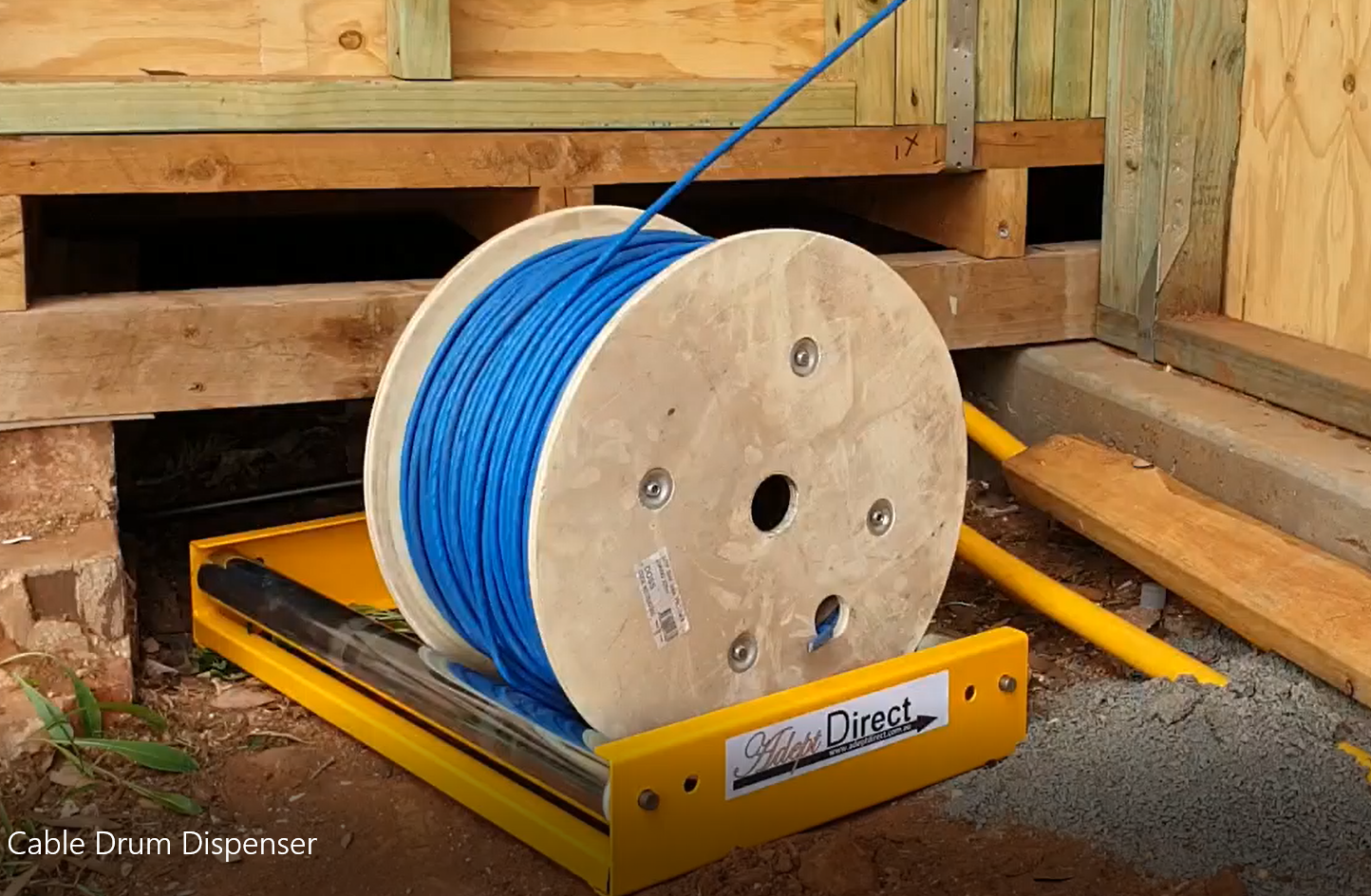
Cable Drum Dispensers

Electricians, telecommunications technicians and solar installers regularly handle heavy cable drums in places that were never designed to make the task easy. A crew may be working in a tight plant room, across an open construction site, beside a solar array or inside a commercial fit-out where floor space disappears quickly. When cable is unrolled by hand, a job that looks straightforward can create unnecessary strain, damaged material and costly delays. The problem is rarely one dramatic mistake. More often, it is the repeated lifting, dragging, bracing, untangling and repositioning that wears down workers and slows the entire installation.

The practical takeaway

Manual cable handling can expose workers to awkward lifting, repetitive pulling and sudden movement when a drum shifts or rolls. It can also leave cable twisted, tangled or kinked before it reaches the installation point.

A suitable cable drum dispenser supports the reel and allows it to rotate in a controlled manner. That simple change can reduce physical effort, produce cleaner cable runs and help crews complete pulls with fewer interruptions.

The result is not merely a tidier worksite. It is a more repeatable cable-handling process that protects workers, materials, equipment and job margins.

Why unrolling cable by hand creates avoidable risk

Cable drums are awkward rather than merely heavy. Their round shape, changing balance and limited handholds can make them difficult to lift or reposition safely, particularly when workers are reaching, twisting or operating in a confined area.

Safe Work Australia identifies lifting, lowering, pushing, pulling, carrying and holding loads as manual tasks that may become hazardous when they involve awkward posture, repetitive movement, sustained force or high force. Construction activities involving these demands can contribute to musculoskeletal disorders affecting muscles, joints and connective tissues.

For cable-installation crews, the common trouble points include:

  • Back and shoulder strain from lifting, tilting or steadying drums in poor positions.
  • Sudden load movement when a reel rolls, slips or drops during setup.
  • Tangled, twisted or kinked cable caused by uncontrolled payout.
  • Damage to cable sheathing or drum flanges when equipment is dragged or handled roughly.
  • Repeated stops while workers free snags, reposition the reel or untangle loose cable.
  • Lost labour time that extends the job and reduces the margin available on fixed-price work.

These problems can compound. One worker may hold the drum while another pulls. The cable tightens, the drum jerks forward, and both workers react quickly to stop it. Even when nobody is injured, the crew has spent time managing the reel rather than installing the cable.

Manual payout compared with controlled dispensing

Worksite factorUnrolling cable manuallyUsing a suitable drum dispenser
Drum movementCan be irregular or difficult to controlReel rotates on a stable support
Worker effortMore lifting, bracing and repositioningLess physical intervention during payout
Cable conditionGreater chance of loops, tangles and kinksSmoother, more consistent feed
Worksite orderLoose cable may spread across the work areaCable follows a more predictable path
Installation paceFrequent stops may interrupt the pullMore continuous cable delivery
Crew allocationExtra hands may be needed to manage the reelWorkers can focus on routing and installation
Material protectionDrum or cable may be damaged through dragging or droppingEquipment supports controlled handling

The dispenser does not remove every cable-pulling hazard. The selected unit must suit the drum dimensions and weight, be positioned on a stable surface and be used according to its instructions. It does, however, replace an improvised handling method with equipment designed for the task.

Protecting supplies between the warehouse and the worksite

Efficient cable handling begins before the drum reaches the installation area. Electrical, telecommunications and solar projects often depend on palletised deliveries containing cable reels, dispensers, fittings, mounting hardware and other supplies moving between distributors, warehouses, vehicles and job sites.

Loads that shift in transit can damage stock, create unloading hazards and force a crew to spend valuable time sorting or replacing materials. Keeping durable composite strapping available gives tradies and worksite managers a practical way to bundle heavy or awkward goods for transport. It is a relatively modest consumable that can recover its cost the first time it helps keep an important delivery together through a demanding trade schedule.

Where Australian crews can compare cable-handling options

Adept Direct is an Australian supplier of professional cable-handling and electrical safety equipment for electricians, communications technicians and other installation crews. Its cable-dispenser range includes equipment for smaller portable reels as well as larger drums requiring heavier support.

For electrical, telecommunications and solar teams, the practical benefit is the ability to choose equipment around the actual drum size, work area and load instead of relying on one improvised arrangement for every job. Adept Direct’s cable dispensers are designed to make cable payout more controlled, less physically demanding and easier to incorporate into a repeatable worksite process. Crews ready to improve the job from the first pull to the final run can browse the supplier’s range and match the dispenser to their usual cable-handling requirements.

What changes when the drum is properly supported

A cable drum dispenser changes the task by supporting the reel on equipment designed to let it rotate during payout. With the reel supported and aligned, workers can concentrate on guiding the cable along the planned route rather than manually spinning, bracing or repeatedly repositioning the drum. A controlled setup can also reduce interruptions caused by unstable reel movement, loose loops and uneven feeding.

The practical result is a steadier installation process. Electricians, telecommunications crews and solar installers can maintain a more predictable cable run while reducing unnecessary physical intervention around the drum. The dispenser must still be suitable for the reel, used on stable ground and operated within the manufacturer’s limits.

A five-step setup check before the first pull

A few minutes spent checking the drum, dispenser and surrounding work area can prevent unstable movement, unnecessary physical effort and interruptions once the cable pull begins.

  1. Confirm the drum and dispenser are compatible. Check the drum’s approximate weight, width and diameter against the equipment manufacturer’s rated capacity and adjustment limits.
  2. Inspect the equipment and reel. Look for damaged rollers, loose components, worn controls, bent frames or deterioration to the drum that could affect safe rotation.
  3. Set up on firm, level ground. Position the dispenser on a surface capable of supporting the combined weight of the equipment and cable drum. Clear loose materials and keep the setup away from traffic routes, edges and other worksite hazards.
  4. Check the working space and cable path. Make sure workers can move without excessive bending, twisting, reaching or stepping over loose cable. Align the reel with the intended route to avoid sharp turns and unnecessary sideways pressure.
  5. Complete a controlled test pull. Draw out a short length at low speed or by hand, depending on the equipment. Confirm that the reel remains centred, rotates smoothly and can be stopped safely before beginning the full installation.

Cable reel rollers should be placed on a firm, level surface capable of supporting the complete load. Check operating controls and following the equipment’s safety instructions before use. Workplace Health and Safety Queensland’s Manual Tasks Checklist adds a useful work-area review, including whether workers can move freely without excessive bending, twisting or overreaching.

Practical guidance for reviewing manual handling risks

WorkSafe Victoria’s Hazardous manual handling health and safety guide provides a useful framework for identifying and controlling tasks that involve lifting, lowering, pushing, pulling, carrying or moving equipment. The guidance is particularly relevant when reviewing how cable drums are unloaded, positioned and managed during installation work.

It encourages workplaces to look beyond the weight of an object and consider factors such as awkward posture, repeated force, sudden movement and the layout of the work area. For electrical, telecommunications and solar crews, this can help expose risks created by unstable drums, restricted access and repeated manual repositioning. The resource also supports a practical shift towards changing the task or introducing suitable mechanical equipment instead of relying only on workers to lift more carefully.

Frequently asked questions

Does a cable drum dispenser remove the need for manual handling?

No. Workers may still need to transport, position or load the drum. The dispenser reduces manual intervention during payout, but the complete task should still be assessed and planned.

Can one dispenser be used for every cable drum?

Not safely. Dispensers have specific load ratings and dimensional limits. The reel’s weight, width and diameter must be compatible with the selected equipment.

Do cable dispensers help prevent cable damage?

Controlled rotation can reduce loose loops, snagging, kinking and uncontrolled movement during payout. Correct routing, pulling force and installation practices are still essential.

Are dispensers useful on smaller telecommunications jobs?

Yes. Compact mobile dispensers can be useful for data and communications reels in offices, server rooms and other restricted work areas, provided the reel remains within the equipment’s rated capacity.

Safer handling is productive handling

Cable drum dispensers replace a physically awkward, interruption-prone task with a more controlled process. The right equipment can reduce strain, protect cable and help a crew maintain steady progress throughout the installation. For Australian electricians, telecommunications tradies and solar installers, that combination strengthens both safety and productivity. Investing in purpose-built cable-handling tools is not unnecessary overhead; it is a practical way to protect workers, materials and job profitability.
Why Every Building Site Must Have Reliable Heavy-Duty Lead Stands

If you’ve ever walked through a busy construction site or workshop, you’ve probably seen electrical leads, hoses, and extension cords running across floors, tangled around equipment, or hanging from temporary hooks. It’s common — but it’s also a major safety, productivity, and housekeeping problem.

That’s why more contractors, electricians, maintenance teams, and workshop managers are now investing in dedicated lead stands.

Products like the Adept Free Standing Lead & Hose Stand are designed to keep leads and hoses elevated, organised, and off the ground, helping create safer and more efficient workplaces.

What are Lead Stands?

A lead stand is a portable freestanding frame designed to support extension leads, air hoses, welding leads, water hoses, and similar cables above ground level.

Instead of cords or power leads trailing across floors or pathways, they are suspended neatly overhead where they are less likely to:

  • Create trip hazards
  • Become damaged by vehicles or equipment
  • Collect dirt, water, or debris
  • Slow down workers moving around the site

Lead stands are commonly used on:

  • Construction sites
  • Electrical fit-outs
  • Workshops
  • Manufacturing facilities
  • Warehouses
  • Maintenance shutdowns
  • Mining and industrial sites

Why are Lead Stands Important for Safety?

One of the biggest causes of injuries on building sites is slips, trips, and falls. Loose extension leads and hoses are a constant hazard, particularly in high-traffic work areas.

By lifting cables off the ground, lead stands help:

  • Improve site housekeeping
  • Reduce trip hazards
  • Protect electrical leads from damage
  • Minimise wear and tear on expensive hoses and cables
  • Help create cleaner work zones

Many site managers also use lead stands as part of their broader workplace safety and compliance initiatives.

Do Lead Stands Save Time?

Yes and often more than people expect.

When hoses and leads are organised properly:

  • Workers spend less time untangling equipment
  • Mobile tools are easier to move around
  • Clean-up is faster
  • Equipment lasts longer
  • Work areas remain more accessible

On larger projects, even small improvements in efficiency can save significant labour time over the course of a job.

What Should You Look for in a Good Lead Stand?

Not all lead stands are built the same. When choosing a lead stand for commercial or industrial use, buyers should consider:

Stability

A good stand should remain stable on uneven surfaces and busy work areas. Some lead stands rely on a a large base frame for stability others incorporate a weighted HDPE base that can be filled with water or sand which makes the lead stand very stable.

Durability

Industrial environments are tough. Reinforced fibre glass construction helps resist corrosion, site damage and is non-conductive.

Portability

Freestanding designs allow workers to reposition the stand quickly as work progresses.

Height and Reach

The stand should provide enough clearance to keep leads safely elevated without obstructing access. The best lead stands are height adjustable. These lead stands use a telescopic pole to position cords at optimum height and collapse the pole down for transport.

Australian Conditions

Products designed for Australian worksites are typically built tougher and better suited to harsh environments.

Why Many Australian Contractors Choose Adept Direct

At Adept Direct, we supply practical cable and lead management equipment designed specifically for demanding Australian industrial environments.

Our lead stands are used by:

  • Electricians
  • Builders
  • Maintenance crews
  • Industrial contractors
  • Workshops and factories

The goal is simple: improve safety, reduce clutter, and help crews work more efficiently.

If your site regularly deals with tangled leads, damaged hoses, or trip hazards, a dedicated lead stand can be a simple upgrade that delivers immediate benefits. Adept Telescopic Lead Stands can be ordered online or via most electrical wholsalers.

You can view the full product details here: Adept Free Standing Lead & Hose Stand

S HOOK & HANGERS

What Is An S Hook Hanger?

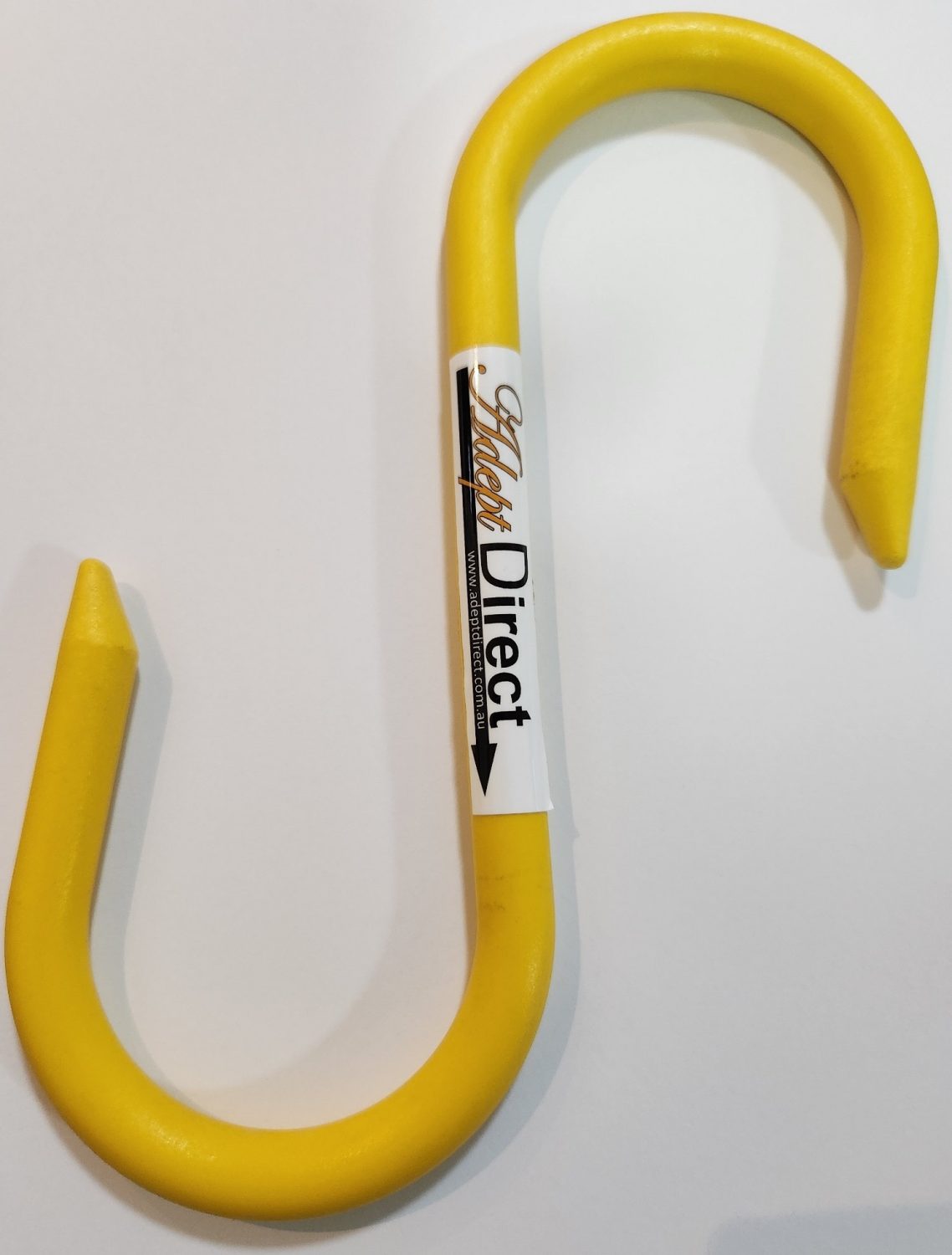
In simple terms an S Hook Hanger is named after it’s shape and is used to support cables. Leads, wires and hoses.  

How is an S Hook Hanger Used?                     

The top part of the S bracket is hooked over a secure structure which can be anything from purlins, steel framing on building sites to work benches or fencing. The bottom portion of the S shape holds the leads or cables and the weight of these items holds the S Hook in position.  

Are S Hooks Better Than Other Temporary Cable Brackets?

S Hooks are among the simplest and fastest hanger brackets to install, move and remove. Other cable hanger brackets that are screwed to a steel or timber surface are more permanent fixtures. Magnetic Cable Hangers are ideally suited to hanging cable on a smooth steel surface.   

What are S Hooks Made From?

Most S Hooks used for hanging temporary cables, telecommunication wiring, power leads or hoses, are made from plastic or polyethylene. This means the S Hook is light, strong and non-conductive.  

Where Can S Hooks Be Used?

S Hooks can be used to hang up just about anything that is 50 kilograms or less and has loop or similar to hooked onto the bottom of the S. Adept Direct S Hooks have been used for hanging all types of cable leads and wires from ship yards to factories, from hanging power tools and gardening implements in workshops and garages.

Are There Different Size S Hooks?

Yes, Adept S Hooks are available in the standard medium size and available ex-stock, as well as an extra-large size large diameter hoses and conduits. The extra-large S shaped cable hook is available on special order [email protected]

Cable Reel Channels – Essential for Dispensing Large Drums of Cable

Large Cable Reel Channels

What are Cable Reel Channels?

Cable Reel Channels are 2 channels with heavy duty rollers to support reels of cable, up to 1 tonne. The channels typically incorporate a ramp at one end so a cable reel can be moved up and rolled into the channels. 

How are Cable Reel Channels Used?

Cable Reel Channels are always used in pairs with an interconnecting bar or axle to keep them parallel. The channels need to be positioned the same distance apart as the flanges of the cable reel. A reel of cable can then be rolled up the ramps and onto the rollers. Adept Direct cable rollers include a locking mechanism so the cable reel can be easily removed from the channels.

Where are Cable Reel Channels Used?

The applications for Cable Reel Rollers are many and varied, and include:

  • Unrolling cable off cable drums on solar farms.
  • Paying out cable at electrical substations. 
  • Reeling cable off drums at ship yards.
  • Cable payout at wind farms.
  • Unroll hoses and cables on construction sites.
  • Installation of telecommunication cabling.

Why use Cable Reel Channels?

Cable Reel Channels are comparatively inexpensive, can be transported in a standard electricians ute or van, and are light enough to be set up by hand. This means these cable rollers are popular for wide variety of applications and cabling installations. They provide electricians and tradespeople the ability to roll out large drums of cable, safely and efficiently, without requiring heavy machinery. In addition, Adept Cable Channels are designed to handle cable reels up to 1000kg so the channel rollers can be loaded with a forklift or telehandler using a Cable Drum Forklift Attachment, if preferred.

Available ex-stock: https://www.adeptdirect.com.au/product/cable-drum-channels-for-large-cable-reels

MAXIMIZING EFFICIENCY & SAFETY WHEN LIFTING & MOVING CABLE REELS

Maximizing Efficiency and Safety with a Cable Drum Attachment for Forklifts

 In today’s fast-paced industrial landscape, efficiency and safety are paramount when it comes to material handling. When it comes to lifting and moving reels, utilizing a cable drum attachment on a forklift can significantly enhance productivity and minimize potential hazards. A Cable Drum Attachment transforms a readily available machine – A Forklift, into a cable drum lifter.  The following white paper highlights the numerous benefits and safety advantages of incorporating a cable drum attachment on your forklift for cable installations.

  1. Increased Efficiency: By incorporating a cable drum attachment, forklifts become versatile machines capable of handling cable or wire reels of various sizes and weights. Here are some ways in which a cable drum attachment enhances efficiency:

a) Quick and Easy Installation: Cable drum attachments can be easily mounted onto forklifts, minimizing downtime and enabling prompt deployment for cable handling tasks.

b) Streamlined Loading and Unloading: The cable reel attachment simplifies the process of loading and unloading cable drums onto the forklift. This efficiency leads to faster turnaround times, reducing overall project completion durations.

c) Improved Manoeuvrability: With varying length spindle available, cable drum attachments allow forklift operators to navigate tight spaces and narrow aisles more effectively, ensuring efficient movement of cable drums throughout the worksite.

  1. Enhanced Safety: Safety should always be a priority in any workplace, and the use of a cable drum attachment provides several safety advantages:

a) Prevents Accidents and Injuries: Cable drums can be heavy and unwieldy, posing a significant risk to both forklift operators and other personnel nearby. The attachment’s secure clamping mechanism ensures that the cable drum remains stable during lifting and transporting, minimizing the risk of accidents and injuries.

b) Improved Operator Visibility: The attachment is designed to optimize the operator’s visibility, ensuring clear sightlines while manoeuvring the forklift with the cable drum. This enhanced visibility reduces the likelihood of collisions with obstacles or other machinery.

  1. Versatile Adaptability: The cable drum attachment offers adaptability to different cable or wire reel sizes, making it a versatile tool for various industries. Some notable applications include:

a) Construction Sites: Cable drum attachments simplify the transportation of electrical or communication cables across construction sites, facilitating the installation process.

b) Telecommunications Industry: The attachment proves invaluable in handling large spools of fibre optic cables, enabling efficient cable installation and maintenance in the telecommunications sector.

c) Industrial Manufacturing: Forklifts equipped with cable drum attachments provide a streamlined approach to handling heavy-duty cables used in industrial machinery, reducing production downtime and improving overall workflow.

Integrating a cable drum attachment into your forklift operations offers numerous benefits and safety advantages. By enhancing efficiency, ensuring operator safety, and enabling versatility, this attachment optimizes cable or wire handling processes across various industries. Investing in a cable drum attachment is a cost-effective way to improve productivity while minimizing the risk of accidents and injuries, ultimately leading to a safer and more efficient work environment.

Forklift Cable Reel Attachment

What’s the Best Magnet Hook for Keeping Hoses and Cords Organized in Steel Buildings

It’s no secret that the world of construction can be chaotic and unpredictable. One minute you’re working on a project, and the next you’re scrambling to find the tools and materials you need to get the job done. If you work in steel buildings, this can be even more of a challenge. With metal walls and ceilings, it can be tough to keep cords, hoses, and other small items organized.

That’s where magnet hooks come in. By using magnetic hangers and hooks, you can keep everything from cords and hoses to tools and equipment tidy and within reach.

Advantages of Magnetic Cable Hooks include:

  1. Durability

One of the most important factors to consider when choosing a magnet hook is durability. The last thing you want is for the cable hook to break or lose its magnetism after just a few uses. Look for cable & hose hooks made from high-quality materials that are designed to withstand the wear and tear of your job site.

  1. Strength

Another key factor to consider is the strength of the magnet. You want a hook that can securely hold your cords and hoses without slipping or falling off, but also not so strong, it is difficult to move to a new position when required. Look for hooks with strong magnets that are specifically designed for use on metal surfaces like steel buildings. In simple terms the large the cable hanger or hook, the stronger a magnet is required. Magnetic hooks range from clips to hold a single cable, to medium sized hooks that hold 3 – 4 leads and 5kg and through to heavy duty cable hangers that can secure a number of hoses leads and cable and 25kg.

  1. Size and Shape

The size and shape of the magnet hook are also important factors to consider. You want a hook that is large enough to hold your cords and hoses, but not so large that it takes up too much space. Additionally, the shape of the hook should be designed to keep your cords and hoses organized and prevent them from getting tangled.

  1. Versatility

Finally, look for magnet hooks that are versatile and can be used for a variety of tasks. You might want to use the hook to hold tools or equipment, or you may want to use it for other tasks around your job site. The more versatile the hook, the more useful it will be in the long run.

Buy online:  https://www.adeptdirect.com.au/product-category/lead-stands-and-hose-stands

Why Use A Water Resistant Extension Lead Cover for Caravans & RV’s?

Why Weather Resistant, Recreational Vehicle Extension Lead Connectors  Are Important

Weatherproof Covers for extension leads used to power caravans and motor homes are important to prevent water ingress into the electrical plugs.

Whilst, most power leads covers, are virtually waterproof to prevent rain and dew penetrating the electrics, it is not recommended to use them submerged in water.

Caravan extension lead covers also play an important role in preventing the lead and power supply coming apart. Most power lead covers can accommodate standard 10amp 240V extension leads as well as the heavier 15amp leads used to power motor homes and caravans.

What is the best tool to unroll cable off a drum?

What is the best tool to unroll cable off a reel or drum?

There are 2 main tools used to unroll cables and leads from drums:

First is the Cable Drum Stand, consisting of 2 A Frames that support an axle that goes through the centre hole of the drum of cable.  A Frame type cable drum stands are ideal if the timber or plastic flanges of the cable drum are uneven or damaged, as it is the opening, through the centre of cable drum, that supports the cable weight and allows the cable drum, to rotate. Whilst A Frame cable stands are the best tool for unrolling cable off drums where the ground is uneven, they do require a little more time to set up than a roller type cable drum. Most common uses are; cabling on solar farms, cabling on building sites and security gate cable installations.  

Second is the Cable Reel Roller that uses 2 roller bearings to support the flanges of the drum of cable. Cable Drum Rollers are very compact and are ready to use instantly, as they do not require assembly. The steel rollers supporting the flanges of the drum of cable can be varying thicknesses and incorporate light duty, medium duty or heavy duty, roller bearings, depending on the weight of the cable drum, being paid out. For wide cable drums, 2 Cable Reel Rollers can be used together, with one under each flange of the cable reel. Common uses for cable drum rollers includes; installation of telecommunication cables, signalling cables and dispensing cable out of a ute or van.  

Why Use A Cable Drum Roll To Unroll Cable

Why use a Cable Roller to unroll cable?

One of the key reasons to use a cable drum roller to spool out cable and wire is to ensure the cable spools off the drum evenly without twisting and tangling. An unrestrained drum of cable can move and jump unpredictably if an electrician yanks the cable to free more cable, off the drum. Other benefits of using cable drum rollers include increased safety as the drum remains in one place and  as the cable is minimises any damage to the cable that may occur, if the cable becomes tangled. These benefits are multiplied if a number of cables are being installed at the same time. A number of cable drum rollers can be set up parallel to despool different drums of cable.